
Who’s Holding the Middle? Middle Managers and the Great Flattening,

What happens when you take out the middle
When an organisation removes a layer of middle management, we notice a number of things tend to happen at once.
Some people start taking everything and anything to the senior leader, because there's no one else to take it to. Some people love their new access to someone more senior, so they want to talk to them about everything too. Some people decide that person is far too senior to bother, so they stop bringing anything at all. And some people just feel a void above them.
All of these things (and more) are happening in the same team at the same time. Meanwhile the senior leader is trying to work out whether to dive into the detail or stay strategic, and nobody has talked about what's changed beyond the obvious - they haven't talked about it with each other or perhaps even considered it themselves.
This matters right now because flattening is everywhere. The "great flattening" has become a huge workplace conversations of 2026, as organisations cut management layers to save money and point to AI as the reason they can.
We're not here to say don't do it. We're here to say there's a conversation being missed, about what middle managers actually do, why you're flattening really, and what you're going to put in their place.
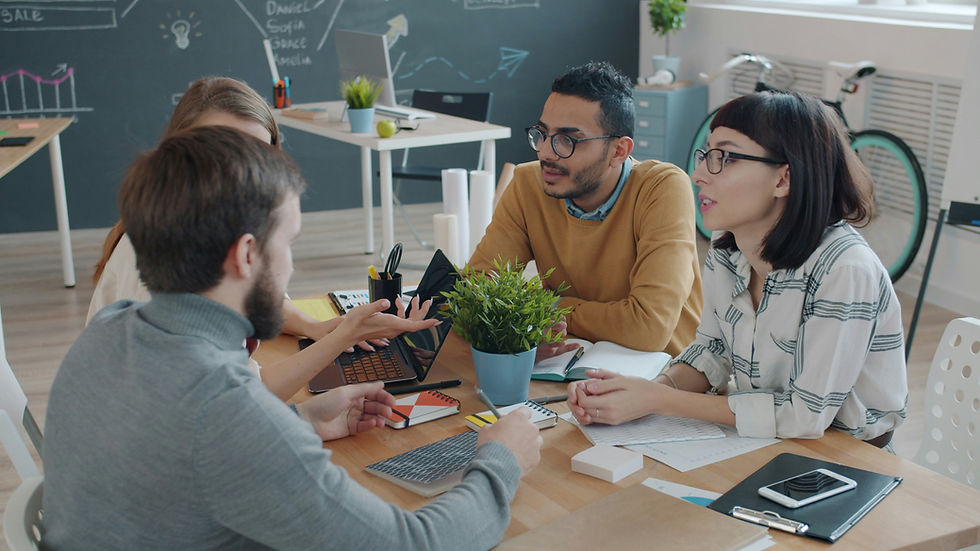
Photo by Vitaly Gariev on Unsplash
Middle managers or middle leaders?
I don't love the phrase "middle manager". The good ones I've worked with aren't managers at all. They're leaders who happen to sit in the middle of a hierarchal structure, and when they're at their best they're pivotal to the whole organisation.
They give senior leaders the space to stay strategic, and they feed in the information that strategic thinking depends on. They can also dip into the detail and grow the people around them. In essence they lift and free the people above them while growing the people below, they are both operational and strategic, in many ways it is the role that asks for the greatest adaptability. And adaptability is a quality growing in demand.
One of the best middle leaders I've seen works in a public sector organisation. He respects the need for space and strategy above him. He uses the people above him as check-ins, guide rails and sense checks - as coaches, not parents. Then he tries to be those things for the people below.
If you ran a 360 on him, I think you'd hear the same thing from every direction: he's got my back, he wants me to succeed, he is what I need him to be.
His senior leaders would say they hear very little of the detail because he's got it covered, and they trust he'll come to them when he needs them. His peers would say he's got their back as they work across the organisation. And the people in his team would say that he supports them to work and grow with transparency and care.
At their best: coach, champion and challenger
When middle leaders are at their best, the role they take is coach, champion and challenger. They help the people around them be at their best, have what they need, and stay connected to the people and things that matter for their work.
The art of it is connectivity and empathy. Not empathy as in feeling sorry for people, but intentional empathy: I understand who you are and what you need to move forward. That's why they can lift people above them, beside them and below them.
At their worst: the hero
Not every middle leader works like this, and the ones who don't are often still trying hard to do the right thing. Most often, what we see is the middle leader as hero.
If you know the drama triangle, you'll recognise what happens next. Whenever someone steps in as the hero who rescues or protects, someone else gets cast as the victim, and someone, or something, becomes the villain.
I've seen middle leaders working under toxic senior leaders, they take all the rubbish coming from above and shield their team from it like an umbrella. It's well intended, but it makes their team the victims, people who can't cope with what's coming, and it infantilises them, potentially stunting their growth. It makes the senior leaders the villains. And because the hero is busy protecting, nobody is managing upwards to say, actually, this behaviour isn't helpful.
I've also seen it the other way round. There's so much going on at ground level that the middle leader is in the weeds dealing with it, believing they're protecting senior leaders by not letting them know. Now the people at ground level are the villains, and the senior team are the victims to be protected. Meanwhile senior leaders build strategies with very little sense of what's really happening in the organisation.
And of course these roles aren't necessarily a choice of this leader - someone else may push them to be the hero who saves the day when their villainous reports don't work hard or fast enough. And visa versa, and on and on and on.
Why we start to question their value
When we don't support middle leaders to be coach, champion and challenger, we start to question their value. If someone is always rescuing, or villainising, or playing the victim, it's natural that we would.
The best ones carry a different risk. They can be so good at holding things together that they become indispensable, and that can cost them a promotion they deserve. The better someone is at holding the middle, the more likely they are to be kept there.
Or of course their teams work so well that we don't really understand what they do - and so we decide they are without value. I've seen that a few times.
The great flattening and the big factory with one foreman
When a pivot is taken out, through a restructure, a promotion or someone leaving, the senior leader above usually goes one of two ways.
Some start parenting. They go deeper into the detail, overstep, and lose the space for strategic thinking they needed in the first place. They become operational, which doesn't help anyone, and the team gets infantilised all over again.
Others try to stay strategic. That would be great everyone is clear on the new relationships and expectations so that they can all make conscious choices. But the conscious choices rarely happens, and conversations to recontract around relationships and expectations are rarely supported. That's where some of the reactions at the top of this piece come from.
The scale of this is real. Korn Ferry found that 41% of employees say their organisation has already cut management layers, and much of the current wave of flattening is being justified by AI.
What worries us is the thinking behind it.
In some organisations the dream of removing middle management doesn't come from trust in people. It comes from outdated, almost Industrial Revolution type thinking. If the processes exist, and technology and AI run them, people just need to follow the process and everything gets done, so why would you need a middle manager?
You end up with a big factory with one foreman, a very senior one, who's also trying to think strategically about the factory. It forgets that we're human, not machines. Even with good process, people need conversation, development and growth.
They also may need the story told in a way that fits them. When a CEO shares something about the future with their senior team, each leader will pass it on with a slightly different slant, because each team has its own needs, its own history and its own experience of what's happened before. A good middle leader also sees across the organisation in a way a senior team member, covering one whole function, sometimes can't. No process does that translation for you. It's human judgement, built in people, and it's not something you can hand off.
Does middle leadership need to be in the middle?
Which raises a bigger question - does middle leadership need to sit in the middle at all? Or are we really talking about two different things, people leadership on one hand, and project or task management on the other?
A flat organisational structure can work, and work brilliantly, when you're clear about that difference. Mayden, a health tech company here in Bath, is one of the best examples I know. They became a self-managing organisation in 2013, with a small group of directors and no line managers anywhere in the business. They've even written a book about it, Made Without Managers.
Two things stand out to me. The first is that it has taken a very long time. The second, which I suspect is why they have stuck at it and not given up, is that the directors shared a genuine belief that people don't need managing. That in the right environment and with the right scaffolding and support people can be self-led, but not because we've divy'd them up into teams of one, because we have a community that is self organising.
If you believe the opposite, that people need telling what to do, or coercing, then taking out middle managers will simply lead you to keep telling them in different ways - treating them as machines to be programmed.
The other thing Mayden have done well is recognise that while people don't need managing, projects do. There's no hierarchy of managers, but every project or sprint has someone who manages it and holds the people in it accountable. So it isn't a hierarchy, but the ownership and contribution is very clear.
If you're going to remove middle management, you have to face into the trickiest, most complex, messy and beautiful bits too. That means helping people understand the limits of their capacity and capability, what's within their power and what isn't. It means building their ability to have high quality conversations that are both supportive and challenging. It means helping people calm their egos and find reward in a system that doesn't look like the 'ladder' we were brought up to climb.
What are you really trying to achieve?
So our position isn't 'don't remove middle management'. It's think hard about it first, and be honest about your intentions and your beliefs about people, about how work gets done, and about how organisations and communities really function.
These are some of the questions we'd encourage leadership teams to hold before they start redrawing the org chart:
What are we trying to do here?
Are we trying to remove middle managers, or barriers to quality conversation?
Are we trying to remove middle management, or bureaucracy?
Are we trying to remove a layer, or lift people so that ownership is spread more widely around the organisation?
Are we trying to reduce cost, and if so, what will it cost us to now and in the future if we do this?
Are we trying to remove the hero, and could we help that person become the coach instead?
Who will translate our strategy into something each team can act on?
Where will our future senior leaders learn to lead?
There's one more conversation worth having - what do we really believe about people and about how we want our futures to look and feel for us, and for the next generations. Because the decisions we make right now, today, aren't separate from the future - they are seeding it.
If you believe in communitites ability to self-manage, to support each other and to share leadership then awesome, learn from Mayden and lift your people in the most adult of ways possible. But if you believe that systems, processes and AI can manage people and get the job done - and that is the best thing for our societies and world - then I'm sorry but we fundementally disagree.
"The process you use to get to the future, is the future you get" Myron Rogers
Let's talk
If you're a CEO or People Director wondering how your leaders can respond to the wider complexity your organisation is facing, we'd love to have an exploratory conversation. There's no agenda beyond finding out what's going on for you and whether we can help. Get in touch.
Author, Sammy Burt is co-founder of Satori Organisational Development, a Bath-based consultancy she runs with Juliet Daye, working with organisations on leadership, culture, strategy and navigating complexity. Connect with Sammy on LinkedIn.


Comments