_edited_edited_edited.jpg)
After the Redundancies: Why doing more (or the same) with less rarely works

If your organisation has recently reduced headcount, you're probably hearing the same sentence in lots of different ways.
"We just need to move on."
Sometimes that's said with optimism.
Sometimes with exhaustion.
Sometimes because people simply don't know what else to do.
The reality is that organisational change rarely arrives neatly packaged. While one person is ready to focus on the future, another is still trying to make sense of what has happened. Someone else is quietly wondering whether they'll be next.
There isn't a right pace. There are simply people, all making sense of change differently. And while that's happening, the work hasn't stopped.
Customers still need looking after.
Projects still need delivering.
Leaders still need to make decisions.
The pressure is understandable.
The risk is what happens next.
Doing the same work with fewer people
Many organisations tell themselves a familiar story. "We've reduced the team, but we'll keep everything else the same." And for a while, people can make it work.
Good people nearly always do.
They work longer. They say yes more often. They absorb work because they care.
But after a few weeks or months, something interesting starts to appear.
People begin asking questions they never had time to ask before.
"Why are we still doing this? Who is this actually for? Does this piece of work still matter?
Could we simply stop?"
It's remarkable how much activity exists inside organisations simply because it always has. Not because it's strategic. Not because customers value it. Not because anyone consciously chose it. Simply because nobody has stopped to ask whether it still belongs.
The hidden cost of keeping everything
This is often where leadership becomes visible. Or its absence does.
Because reducing headcount without reducing work creates a difficult choice. Either people become more productive. Or they become more overwhelmed.
They're very different things.
Overwhelmed people don't suddenly become more innovative. They become more reactive. More cautious. More transactional.
Eventually, they stop bringing their best thinking because all their energy is being spent simply keeping up. It makes me tired just thinking about it (or remembering it!)
That's when organisations often begin to notice:
work that no longer makes strategic sense
projects nobody feels able to stop
personal agendas that continue with good intentions but little organisational value
decisions being delayed because nobody feels able to challenge priorities
performance conversations quietly disappearing because everyone's "too busy"
None of this happens because people don't care. Quite the opposite. It happens because they do.
More isn't the answer
One of the biggest misconceptions after restructuring is that success comes from helping people do more. Or from finding something else to fill the gap.
We see something different.
The organisations that recover most successfully don't ask people to carry more, and they don't look for a shortcut to make the shortfall disappear. They help their people become more intentional, more connected, more strategic.
They create permission to stop.
Permission to question.
Permission to simplify.
Permission to say no.
Because if everything remains a priority, nothing really is.
This isn't a problem that gets solved by finding a faster way to process the same volume of work. It's solved by leaders and teams making better, more human judgement calls about what actually deserves attention. That's a capability you build in people. It isn't something you can hand off.
Leadership looks different after change
This is where leadership often shifts. It's less about having all the answers. More about creating the conversations that help teams decide what genuinely matters now. Helping people reconnect with purpose. Helping them understand what stays. What changes.
And just as importantly...
What can be let go.
Those conversations are rarely comfortable, but they're often the difference between organisations that slowly drift into burnout and those that rediscover focus.
What we're seeing
We're working with, and have worked with, organisations navigating exactly these conversations. Some have recently restructured. Others have merged. Some have been acquired.
Others are simply responding to changing markets with fewer people than they had a year ago. Regardless of sector - whether engineering, manufacturing, professional services, finance, logistics or creative industries - the patterns are remarkably similar.
The challenge isn't simply capacity - It's clarity.
Helping people understand what matters most now.
Helping leaders have better conversations.
Helping teams reconnect to strategy rather than becoming trapped in endless activity.
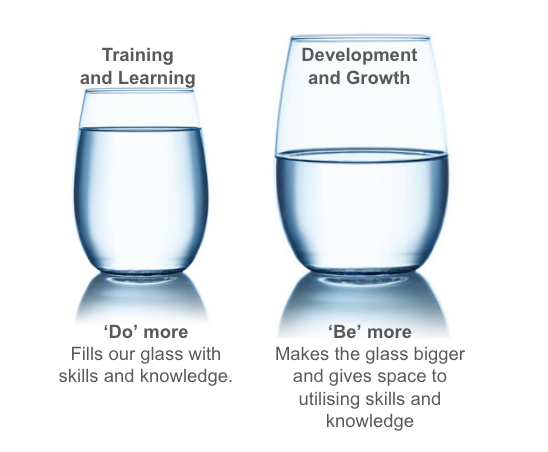
Helping people be more, not do more
Our work rarely starts with another framework or another change programme. It starts with the work that's already happening.
Real decisions.
Real priorities.
Real conversations.
Together we help leadership teams notice what's getting in the way of performance, identify work that no longer creates value and build the confidence to make different choices.
Because sustainable performance doesn't come from asking people to carry more.
It comes from helping them think differently about the work that truly matters.
And perhaps that's the opportunity organisational change offers us. Not simply to rebuild what existed before, but to create something more focused, more human and more resilient than what came before.
FAQS
Why does reducing headcount often lead to burnout? Because the volume of work is rarely reduced alongside it — the same output is expected from fewer people.
What should leaders do after a redundancy process? Create explicit permission to stop, question and simplify work, rather than assuming everything that existed before still needs to.
How do you know culture is at risk after layoffs? Watch for legacy work nobody feels able to stop, performance conversations disappearing, and decisions being delayed because no one feels able to challenge priorities.


Comments